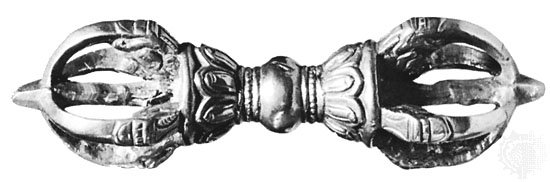

“To disparage/insult women, whose nature is wisdom, is the fourteenth” ཤེས་རབ་རང་བཞིན་བུད་མེད་ལ། ། སྨོད་པར་བྱེད་པ་བཅུ་བཞི་པ། ། — from Vajrayāna-mūlā-patti-saṅgrahaby Aśvaghoṣa
In a new short reel I briefly speak about why, as a Vajrayana practitioner, it is essential not to denigrate or insult (mentally, verbally or physically) women, as a group or individually. However, there are various reasons for this, which I outline in greater detail below.
This article is not just based on my personal opinion but on extensive prior studies, translations, and practice of various Vajrayana texts (as well as being a secret consort). In particular, when I was translating some Kālacakra texts, I studied in detail the essential importance of consort practice for attaining full awakening, and why the woman’s body is so important for achieving that [1].
The dangers of breaching the Vajrayana root downfalls, and denigrating, abusing and misusing women’s bodies as consorts, is severe for both the Vajra master (vajra hell), who frankly should know and act better than the chosen student/consort. Also, unqualified vajra masters taking up unqualified (or unexamined) female consorts (often chosen for superficial, worldly reasons such as their physical appearance and age) has led to a major degeneration in Vajrayana and a gross denigration of women as women and consorts. I recently discovered, via Kālacakra scholar-translator, Niraj Kumar, that the oft-spoken idea (by men) that women have to be pretty teenagers to be qualified consorts is also incorrect and that the ideal female consort in Kālacakra is considered to be a woman in her late 40s to early 50s. More on that in another article!
The karmic consequences of such ‘impure’ conduct is increasingly visible, with the advent of female social and economic equality in many places, women have found a voice to speak about such harmful violations and experiences, where they have felt forced (or intoxicated, or misled/deceived) to engage in ‘secret’ (or not secret) unions with monks, who then pretend they do not exist on the relative level.
Of course, highest yoga tantra practice is not based on biology alone and/or not denigrating women. All people who are genuinely qualified to practice highest yoga tantra (and for it to be effective) would also need to have stable mental foundation of intact and pure vows and ethical conduct of the 5 main precepts, stable love and compassion for all beings, bodhicitta, refuge, merit and purification of negative Karma, and a reasonable understanding of emptiness as well as have recieved an empowerment, transmission and instruction from a genuinely qualified vajra master. It’s not something anyone can just pay/sign up to “get” like buying a burger and have a ‘taster’ course etc. Although these days with so many mass empowerments online and in person by teachers people have never even met, never mind know well, one may get the false impression that anyone can participate in such highly advanced yogic practices who wants to/feels like it!
For more on what consort practice is, and what makes a qualified consort and vajra master, as well as what can go wrong if the vajra master does not respect (and worse, actively denigrates) women, see my 2020 article/testimony here.
Music? Respect by Aretha Franklin, Sad-Eyed Lady of the Lowlands by Bob Dylan, and Woman by John Lennon.
One of the fourteen root Vajrayana downfalls: “woman whose nature is wisdom”

The first reason is because disparaging women is one of the fourteen root downfalls in a famous text called Vajrayāna-mūlā-patti-saṅgraha, རྡོ་རྗེ་ཐེག་པ་རྩ་བའི་ལྟུང་བ་བསྡུས་པ།) by the Indian Buddhist master, Aśvaghoṣa), it says:
“To disparage/insult women, whose nature is wisdom, is the fourteenth” ཤེས་རབ་རང་བཞིན་བུད་མེད་ལ། ། སྨོད་པར་བྱེད་པ་བཅུ་བཞི་པ། །
This downfall only refers to women, but this is not some ‘reverse sexism’ (whatever that means!), where women are placed on a higher pedestal and seen as superior to men (if only! ha ha). Rather, that women’s role as an equal partner in any tantric union, her body (the source of wisdom), speech and mind, and as equivalent in nature to the deity goddess herself must be present for it to be genuinely blissful and beneficial.


The nature of women’s biology: ‘red essence’ and mothers

The first, and most obvious reason for not denigrating women as Vajrayana practitioners is the nature of women’s bodies, biologically and on the vajra body level. So, without going into secret teachings or specifics, for a Vajrayana practitioner to attain the fully awakened state in the highest yoga tantra, it is essential to have a male-female union, and women as consorts are said to be the source of women, men the bliss/method. The woman must be revered and regarded as the actual yidam deity/goddess herself in such a union.
As I wrote about before here, this union has to be biological male-female, and cannot be same sex for various physical and non-physical reasons (which do not require explanation here). In any case, reproduction is not the aim of consort practice, nor is sexual pleasure (which is more a by-product) it is full awakening. Also, the vast majority of XX biological women have wombs and ovaries, and thus are the source of human life, birth and mothers. This is another reason why women’s bodies should never be denigrated and respected.

Vajra Body and full awakening in union

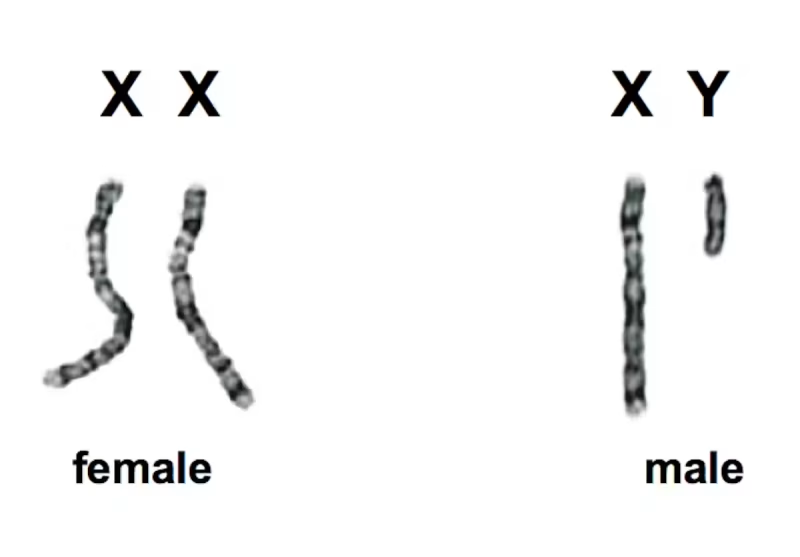
The vajra body of women (and men) according to Highest Yoga Tantra texts, such as Kālacakra, is that women have more of the ‘red essence’ and men more of the ‘white essence’. These ancient texts were composed well before contemporary biology, which now refers to the chromosomes of men and women as XY and XX in terms of the key identifier for biological sex differentiation and development. It is likely that the red essence refers to blood/the womb/ovaries and white essence to male sperm/bodhicitta.

In addition, the opening up of central channel (as can be seen in this diagram), is an important feature of the ‘vajra body’ in attaining full awakening, particularly untying the knots in the heart chakra,which cannot be done by a male practitioner/master without a female consort. The red and white channels around the blue central channel are on difference sides in men and women. Bob Marley sang: “No woman, no cry”, a male Vajrayana practitioner would sing “No woman, no full enlightenment!” ha ha ha.
What is denigration of women? Physical and sexual abuse, and treating women like ‘objects’

The final question is what does it mean to denigrate women as a group or individually? It is clear that the downfall refers to sexist, derogatory views of women (as a group) such as their being stupid, inferior to men, undeserving of respect, love, compassion or care or viewing their bodies like objects.
Abusing women’s bodies physically (sexually or violently) would also clearly breach the downfall. Even consuming and using women’s bodies like material objects for sexual pleasure (i.e. prostitution) to be discarded and thrown away/forgotten about afterwards, would also be disrespectful, and would breach the Mahayana/Bodhisattva vows of non-violence and love and compassion for all beings (see an interesting article here on the dangers of ‘re-branding’ prostitution as sex work, which generally would legitimise the abuse of women).
In fact, as Carol J Adams wrote in her groundbreaking book, the Sexual Politics of Meat (1990) there are many similarities between the lack of love and compassion, derogatory mental attitudes in consuming the ‘flesh’ of murdered animals and that of men who buy women’s bodies as mere objects, as authentic consent (not based on any deception or exploitation) is essential for any relationship based on trust and mutual respect.
Basically, a ‘golden’ rule for deciding if it is denigrating to others, is ‘do unto others as you would have done to you’. So if you would not like it done to you, you daughter, wife, girlfriend, sister were treated in such a way, then don’t to that to women!

For example, one of the reasons, Tilopa’s female yogini teacher (an awakened being) ordered that he abandon being a privileged monastic scholar and work as a slave to a lower caste and materially poor Indian prostitute, was to reduce his arrogant pride and not some sexy pimp for ‘sex workers’ as some delusional contemporary partriarchs have narrated. Tilopa was in fact commanded to do such challenging and denigrating work in poor external conditions for twelve years and to crush sesame seeds by day. Far removed from five star hotels, spas, expensive escorts and online porn!
Why monastics should not practice Highest Yoga Tantra: Je Atisha’s advice and monastic training to see women’s bodies as dirty

As I spoke about in my talk, Going back to the Yogic and Female Roots of Vajrayāna, at a Bhutan conference 2022 (which was subsequently censored/unpublished by the organisers, without any reasonable or polite explanation), the monastic ‘takeover’ in Tibetan and Himalayan Buddhism has also led to a serious degeneration and degradation of women as consorts (and teachers). The re-recorded talk (with images) can be watched here.
In my talk, I give the example of Je Atisha’s words in his famous text Lamp on the Path to Enlightenment that monastics should not even take the second and third empowerments in Highest Yoga Tantra Vajrayana (never mind take actual or secret consorts!) because it will lead to a breach of their celibacy vows. The 14th Dalai Lama affirmed this advice when he recently gave the Red Chenrezig empowerment and yet, he still has given many such empowerments to hundreds (if not thousands of ordinary/not highly realised) monastics, which breaches Je Atisha’s advice.
Another reason, in my view, why monastics should not practice with consorts (secret or real) is because they are also trained to view women’s bodies as ‘dirty’ and impure (see Shantideva’s famous text, Guide to a Bodhisattva’s Way of Life). When ‘ordinary’ monastics have unions with women, while also trying to maintain the conduct and outer appearance as a monk, carries with it a strong risk for harm and denigration of the woman (and the monk who by failing to correctly combine both Vinaya and Tantric ways of conduct and vows).

Conclusion
In sum, there can be no development of wisdom, bliss or full awakening, if women are not genuinely respected, loved and revered not just as individuals, but as a group by male practitioners and teachers.

Endnotes
[1] Yet, the Tibetan Buddhist teacher who has given the most mass Kālacakra empowerments over the past 60 years or so, is the 14th Dalai Lama a monastic, and Je Atisha stated that monastics should not even take the first or second empowerments (never mind practice with consorts).
💯
To me, it appears that the Mahasiddhas themselves chose, or taught the choice of, female consorts based on superficial, worldly factors like physical appearance and age:
“The Mahasiddha Saraha distinguishes five different female ritual partners on the basis of age: the eight-year-old virgin (kumari); the twelve-year-old salika; the sixteen-year-old siddha, who already bleeds monthly; the twenty-year-old balika, and the twenty-five-year-old bhadrakapalini.”
Source: The Buddhist Tantras: Light on Indo-Tibetan Esotericism, Page 198
Then I red the story of the Mahasiddha Dombi Heruka who literally bought his 12 year old consort from her parents.
“A group of low caste singers came to the capital offering to sing and dance for the king (Dombi Heruka). One of the singers had a 12 year old daughter who was very attractive. She had a lovely face and a good complexion; furthermore she was unsullied by worldly thoughts and had all the qualities of a padmini. So the King said to the low caste singer, “Would you give your daughter to me?” He took the girl after giving her father a sum equal to her value from the treasury. For 12 years the people did not know that she was the King’s tantric consort, but eventually it was discovered.”
During his exposition of the secret initiation, Tsongkhapa cites this from the Mahamudratilaka:
“If one does not obtain a twelve-year-old or sixteen-year-old female, adorned with good features, long eyes, attractive figure, and youth, then a twenty-year-old one is proper. Other ‘seals’ above twenty put the occult power far off. One should offer his sister, daughter, or wife to the Guru.”
Source: The Buddhist Tantras: Light on Indo-Tibetan Esotericism, Page 198
https://archive.org/details/dli.ernet.108215/page/198/
These textual sources you cite are all English translations though, and may be wrong or misinterpreted. I would need to read the original texts in Tibetan to check for accuracy and context. Many translations that were done in the past fifty years or so, need re-doing. Also academics are often not practitioners and so have not had the pith symbolic instructions on the meaning, and take it too literally. For example, the word “occult” in one of these sentences you mention seems all wrong to me, and no Tibetan or Sanskrit equivalent for it.
Be careful just citing things , you need to also say who translated it and when. Genuine Mahasiddhas and siddhis, never taught or took consorts based on physical age or appearance, they saw beyond all that conditioned, impermanent phenomena and were realised.