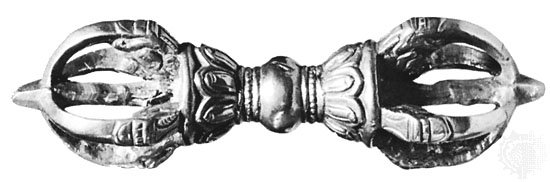

“Whatever karmic veils I may have developed that would lead to the hells, or to the animal realm, or to the land of the pretas, or to birth in border regions, or amongst barbarians, or amongst the long-lived gods, or that would lead to incomplete sense faculties, or holding wrong views, or to not rejoicing at the advent of a Buddha—All of these I confess in the presence of the blessed buddhas, who are aware, who observe, who are witnesses, who are authorities, who know and see. I admit them and do not conceal them, and I make a vow to refrain from them henceforth!” –excerpt from the Confession of Downfalls
“ Since the Secret Mantra has many skilful means and there is huge amount of subtle downfalls and faults, one method can purify them in an instant: meditation on Vajrasattva and the recitation of the hundred syllables, he explained is a profound and extensive purification. If one is diligent [in the practice] then all of the subtle and medium faults and downfalls can be completely purified at their root. As for the huge downfalls, they won’t increase and will be suppressed, and gradually they will be purified.”
–Je Atisha, cited by Je Tāranātha in Hundred Blazing Lights on the Vajrasattva practice
Another important part of the 17th Gyalwang Karmapa’s joint statement with the unofficial contender for the Karmapa title, Thaye Dorje was the call to recite the Sutra in Three Sections 1000 times, and the Vajrasattva mantra 100 000 times:
“..It would have a strong positive impact for every single follower of the Karma Kamtsang to recite, with deep regret for their past actions, the Vajrasattva mantra a minimum of one hundred thousand times and The Sutra of Three Sections one thousand times, as soon as possible.”
Here is a short piece on this Sutra of Three Sections and the Vajrasattva practice based on some of what I have translated and published here before.
Music? Vajrasattva mantra by Deva Premal and the Gyuto monks, The Things You Said and Try Walking in My Shoes by Depeche Mode, and Higher Ground by Stevie Wonder.
Part I: 35 Confession Buddhas/Sūtra of Three Sections (The Bodhisattva’s Confession of Downfalls) –
Origin of the text and ritual

The Sutra of the Three Sections (or Heaps) (Skt. Trīskhandhadharmasūtra; Phungpo Sumpai Do, ཕུང་པོ་གསུམ་པའི་མདོ), also known as The Bodhisattva’s Confession of Downfalls (Jangchub Sempai Tungwa Shagpa: བྱང་ཆུབ་སེམས་དཔའི་ལྟུང་བ་བཤགས་པ།) or simply Confession of Downfalls (Tungshag) — is an excerpt from Determining the Vinaya/Discipline: the Sutra of Upali’s Questions (Toh 68 Vinayaviniścayopāliparipṛcchāsūtra; Dulwa Nampar Tenla Babpa འདུལ་བ་རྣམ་པར་གཏན་ལ་དབབ་པ་ཉེ་བར་འཁོར་གྱིས་ཞུས་པ).
The relevant section is cited in Shantideva’s Compendium of Training (Toh 3940, Śikṣāsamuccaya; Labpa Kuntu བསླབ་པ་ཀུན་བཏུས) as a method of purifying transgressions of vows and downfalls of the bodhisattva vow by invoking thirty-five buddhas of confession. The section in later commentarial literature was referred to as the Sutra of the Three Heaps, because of the three heaps or factors that reinforce the confession. These are: 1) homage, 2) confession, and 3) rejoicing or dedication.
The Sutra teaching was given by the Buddha after a group of thirty-five monks had taken the bodhisattva vow and accidentally caused the death of a child while they were out begging for alms. The group went to Upali[i], one of the ten important disciples of the Buddha, and asked him to request from the Buddha a method of confessing and purifying what they had done. The Buddha then spoke this sutra, and as he did so, light radiated from his body and thirty-four other buddhas appeared in the space all around him. The thirty-five monks prostrated before these buddhas, made offerings, confessed their misdeed, took refuge and re-awakened bodhichitta.
An English (with original Tibetan) translations of the whole Determining the Vinaya Sutra can be read here [2], and the Confession of Downfalls here.
The Confession of Downfalls practice in Tibet

In a teaching in January 2021, the 17th Karmapa explained that this text is:
“ ..important for Mahayana practitioners because the main aim of Mahayana practice is achieving Buddhahood. Buddhahood is the result of gathering vast accumulations and abandoning the obscurations and their imprints. Thus everyone who wishes to achieve Buddhahood must definitely strive to gather the accumulations and purify the obscurations.”
And that:
“Many Mahayana sutras and treatises teach that bodhisattvas must definitely recite this sutra to confess and purify their wrongs and downfalls. In Tibet, this sutra is recited primarily to confess downfalls. Chinese Buddhism does not really have a tradition of reciting this sutra, but there is a tradition of reciting the names of and making confessions to 88 Buddhas, including all 35 mentioned in the Sutra in Three Sections.
Among Tibetan traditions, there are slightly different ways of reciting this sutra. For example, in the Gelug tradition, they add the word ‘tathagata’ before the name of each Buddha. It says in one work of 8th Karmapa Mikyo Dorje that adding the word ‘tathagata’ was a pith instruction of Tilopa and Naropa but these are merely differences in the style of recitation, and I do not think there is any great difference in meaning.”
Names of the 35 Buddhas
Here is a table of the names of the 35 Buddhas in Sanskrit, Tibetan and English translation, helpfully provided here: 


Visualisation: ‘Hand gestures’ only tradition and ‘with attributes’ tradition


According to Jeff Watts of Himalayan Art Resources:
“In Himalayan and Tibetan art there are at least three different iconographic systems for depicting the individual Thirty-five Confession Buddhas: 1. Gestures Only System, 2. Nagarjuna System, and 3. Tsongkapa System.
Watts’ categorisation of the iconographic systems although helpful, seems to be lacking and slightly biased though. I did a quick search of TBRC and there seem to be several associated with the Confession of Downfalls text including Karma Kagyu masters such as Karma Chagme (Rāga Asya) and Jamgon Kongtrul Lodro Thaye.

Watts cites one text by Jetsun Tāranātha, yet there are three texts by Tāranātha listed on TBRC [3]. For example in a text called Commentary on the Confessions of Downfalls (Tungshag gi Drelwa, in his Collected Works, Tāranātha discusses the various systems for depicting the thirty-five Buddhas and states that he has a doubt, that the systems of depicting the Buddhas with various hand objects (attributes such as a sword, vajra, tree branch, Mount Meru), that these originate in India or from Indian source texts – and suggesting, like Sakya Pandita, that any such text (or texts) may be spurious.
In any case, the visualisations are different but the point of the practice is the same, confessing downfalls to the Buddhas.

Part II: Vajrasattva
Wrathful and peaceful forms, and the meaning of the mantra


I have written quite a bit before about the Vajrasattva practice, the meaning of the mantra, visualisation and four powers in relation to the work of Jetsun Tāranātha’s magum opus on Kālacakra ‘Hundred Blazing Lights’. In that text and Bamda Geleg Gyamtso’s text on the Kālacakra preliminaries, Vajrasattva forms one of the six ordinary preliminaries. However, as Tāranātha explains there is the Geruka (wrafthful Vajrasattva mantra) where Vajrasattva is visualised naked other than bone ornaments, with consort and there is the peaceful Vajrasattva mantra, where he is clothed alone, and/or with a clothed consort.
Tāranātha also goes into significant detail explaining the meaning of the mantra, which I have reproduced here in a table below. Generally, the mantra is a plea to Vajrasattva to consider and look well upon the person, with affection, not to abandon them, to keep their samaya, virtuous motivation and help them accomplish the ordinary and supreme accomplishments.
First, Tāranātha gives an explanation of the ‘hundred syllable’ mantra and why it is called that, as well as the two main categories of the Vajrasattva one hundred syllable practice: peaceful and wrathful. The wrathful Heruka Vajrasattva mantra is practised in the Dro Kālacakra tradition, and the mantra is slightly different with the name ‘Heruka’ replacing the ’sattva’ in the peaceful form of the mantra.
Tāranātha explains that:
“Generally, in terms of the hundred syllable mantra for purifying obscurations, there are two completely different types: 1) the hundred syllables of the Tathagatas and 2) the hundred syllables of Vajrasattva.
The first, comes from the Tantra of the Arrangement of the Three Samayas. In terms of the second, there are innumerable types of supramundane deities in the classes of tantra whose individual names can be used in the one hundred syllable mantra. So even though some [of the mantras] do not have an exact fixed number of one hundred syllables, they are called ‘one hundred syllables’ since they are of the same class of mantra. They are different [in terms of syllables] due to the names of the deities being longer or shorter[i]. In terms of those [hundred syllable mantras] that have not [had the name] changed or added, there are two main categories: the hundred syllables of peaceful Vajrasattva and the hundred syllables of wrathful Heruka Vajrasattva.
In terms of the first [peaceful Vajrasattva], these days, this is the most well-known hundred syllable mantra of Vajrasattva. Also, in the Yoga Tantras and that which is accordant with it, [Vajrasattva] is meditated on as a Sovereign of the Bodhisattvas, as one single hero. In the tradition of Secret Mantra [the highest tantra], one meditates on the innately arisen Tathagata, face-to-face in union with consort as two. The mantra is the same.
In terms of the hundred syllables of Heruka, the mantra is mostly the same as before. It has not been added to [in terms of the name]. It was clearly taught in Glorious Tantra of Unexcelled Utterance. At this time, in other traditions of Vajrasattva, there has originated[a form of the deity], which is boasted as being in the tradition of Kālacakra , that is blue with three faces and six hands. This is nothing but a self-fabrication alone. Why is that? Even though that deity is taught in the Kālacakra Tantra, it did not state it has a purpose in terms of purifying negativities and obscurations. Also, the mantra [of that deity] is not one hundred syllables. The hundred syllables here purifies negativities, repairs degenerated and broken [vows and commitments] and for supplicating the deity. But not all mantras of Vajrasattva are like that. Meditating on the deity like that, one recites the one hundred syllable mantra. By meditating on that deity [form of Vajrasattva] and reciting the hundred syllable mantra, they are merely thinking that all Vajrasattvas are the same type. For example, it is not suitable to meditate on the three-faced, six-armed deity Vairochana of the Net of Illusion (Guhyagarbha Tantra) (sngags ngan song sbyong rgyud) while reciting the mantra of Durga that originates in the Tantra that Purifies From the Lower Realms. Some previous lamas of the Dro tradition had the male consort as peaceful, white Vajrasttva embracing a red, female consort and reciting the peaceful hundred syllable mantra. Generally, it is not that this is not good, however, in the guidance instructions of the omniscient Buddha of the three times, Dolpopa on upwards, the Heruka Vajrasattva is generally done as it is considered to be very good and from an excellent source.’’


The Four ‘Opponent Powers’ in Vajrasattva practice
The other important part of Vajrasattva is the presence of the ‘four powers’ for it to be an effective purification of negative karma. Tāranātha also gives instructions on the four ‘opponent powers’, stressing that the ‘power of vowing not to repeat ‘is the most important:
“What are the four [powers]? Here we will see.
-
- The power of support,
- The power of application,
- The power of remorse,
- The power of vowing not to repeat,
So, at the time of confessing one’s previous negative actions, one has a mind of strong regret, like the intense mental regret at having drunk poison, that is the power of remorse. The mind that strongly vows not to do those actions again, even at the cost of my life, is the power of not wanting to repeat it. Here in this context, it is unsuitable for there not to be present both the mind of regret and the mind that vows, they are equal. If there is no mind of turning away [from the negativity] then even if one has a mind of regret, it is not a pure confession and so it will be merely reciting words. For that reason, the mind that vows [not to repeat] is the most important one.”
As for number 2) the ‘power of application’, Tāranātha explains in detail the ‘six renowned methods’ of the power of application:
“Generally even though doing virtuous actions are the antidote to transforming negative actions. However, in this context, specifically applying an antidote to one’s negativities and to accomplishing virtue, is called the ‘power of application’. So, when we are specifically intending to purify negativities and do any kind of virtuous action that can be considered applying the remedy. In terms of the renowned six methods of the power of the application, they are easy to practice and have great benefit and are a summary of all the important necessary points.
These are:
-
- reciting the names [of Buddhas and Bodhisattvas];
- constructing images and material representations [of the Buddha, stupas and dharma texts];
- making offerings;
- relying on the profound teachings;
- reciting mantras; and
- belief in emptiness.”
Tāranātha gives examples of the types of ‘negativities’ that the hundred syllable mantra purifies:
“At this time, here [the third preliminary] the negative actions referred to in the instructions on the hundred syllables that purify the obscurations and negativities, are those coarse negative actions and obscurations, meaning the gross ones that can suddenly arise as obstacles and interfere with our experience of the main practices of the vajra-yogas. In addition, in terms of those negative actions, obscurations, faults and downfalls, they are the negativities we have accumulated in this life since they are closer in time, and are the strongest in terms of of experiences arising [during practise of the vajra-yogas]. Also, other negative actions, such as the downfalls which transgress the three types of vows are also extremely serious obstacles [to practice]. In particular, mistakes and transgressions of samaya commitments and the negativity of having used the religious offerings, business and food are particularly big obstacles to experiences arising [in practice]. In order to purify these [negativities] meditating on and reciting the hundred syallables of Vajrasattva is highly recommended.”
The necessity of purification according to Je Atisha

Tāranātha also gives a detailed description why it is important and necessary to practice Vajrasattva, using Atisha’s famous example of the continual accumulation of downfalls in the Secret Mantra, which collect like dust on a mandala plate:
“Lord Atisha taught that: The subtle faults and downfalls of the secret mantra are continually arising. For example, if one is a in a place that is full of dust and one places a mandala plate outside, it will immediately become full of dust, like that. So then, surely the path in one’s mental continuum will not arise? [Atisha’s reply]: Since the Secret Mantra has many skilful means and there is huge amount of subtle downfalls and faults, one method can purify them in an instant: meditation on Vajrasattva and the recitation of the hundred syllables, he explained is a profound and extensive purification. If one is diligent [in the practice] then all of the subtle and medium faults and downfalls can be completely purified at their root. As for the huge downfalls, they won’t increase and will be suppressed, and gradually they will be purified.
Previously in Tibet, there were many oral instructions on the hundred syllables of Secret Mantra practitioners. However, their students were few in number, so it did not become generally widespread. However, due to this teaching by Jowo [Atisha], among all the new[ii] and old Tantric practitioners a lot of clamour and interest arose in doing this practice, it is said.’’
So, as I said before, in relation to finding genuine peace and harmony with the people within the Sharmapa faction who accused Tai Situpa of fraud, being a liar and Chinese spy, the 16th Karmapa’s sacred letter a forgery and the 17th Karmapa a Chinese spy, that can only happen if they show genuine regret, retract those false accusations and statements and vow never to repeat them again!
Endnotes
[i] Upali (Skt. Upāli; nye bar ‘khor) was one of the principal disciples of the Buddha. It is said that ‘since he was a barber by trade before joining the Sangha, he was asked to shave the hair of all those who later entered the community. He was asked by Mahakashyapa during the First Council to state by heart all of the rules of Vinaya discipline.
[2] In the Introduction of a full English translation of the Sutra, it states:
“Ascertaining the Vinaya: Upāli’s Questions is a sūtra focused on the relationship between and integration of the prātimokṣa vows of monastic discipline and the conduct of a bodhisattva who follows the Mahāyāna tradition. The sūtra’s two main interlocuters, Śāriputra and Upāli, query the Buddha about the relationship between these two levels of commitments, eliciting a teaching on the different orientations held by the followers of different Buddhist vehicles and how their different views affect the application of their vows. Ascertaining the Vinaya is a particularly valuable sūtra for its inclusion of a unique form of the confessional “Three Sections” rite, making it one of the few extant canonical sources to describe it at length.”
[3] Jo nang rje btsun tā ra nā tha.
–“lTung bshags kyi ʼgrel pa.” gSung ʼbum tā ra nā tha (ʼdzam thang par ma), vol. 17, pp. 947–82. Buddhist Digital Resource Center (BDRC), purl.bdrc.io/resource/MW22276_DCC077.
— “Phung po gsum paʼi rgyun bshags kyi don cung zad bshad pa.” gSung ʼbum tā ra nā tha (dpe bsdur ma), vol. 34, Krung goʼi bod rig pa dpe skrun khang, 2008, pp. 343–70. Buddhist Digital Resource Center (BDRC), purl.bdrc.io/resource/MW1PD45495_6FCDC7.
— “Byang chub ltung bshags kyi rnam par bshad pa.” gSung ʼbum tā ra na tha (bris ma), Par gzhi dang po, vol. 5, Krung Go’i Bod Rig Pa Dpe Skrun Khang, 2008, pp. 637–68. Buddhist Digital Resource Center (BDRC), purl.bdrc.io/resource/MW1PD77570_E9AEE6.
Not Kagyupa here, but at this point it looks uninspiring to refer to “the real Karmapa, alongside his forfeit contender”, especially when both are sitting at the same height, signing on the same documents and posing for pictures in a manner of showing equal status – and that they will both decide the future of the school TOGETHER.
With all due respect, if you are not a Karma Kagyu follower, then of what interest is it to you anyway? Isn’t that part of the problem that people outside the Karma Kagyu got far too involved in it all and had too much influence and say in something that is not really their business?
In any case, it is not about what ‘looks inspiring’ to some or not. This article is about what is actually true, just and who is the actual Karmapa and why. if some people find it uninspiring to talk about that and ask those questions, so be it, it’s not supposed to be a popularity contest. Others, including myself, may find it totally uninspiring to see a person/group of people who is not the Karmapa, but also launched a series of actions and speech against the 17th Karmapa that is still preventing him from visiting Rumtek Monastery and Sikkim and other extremely damaging and divisive effects, including calling Tai Situpa a fraud and liar and 16th Karmapa’s letter a forgery. Those things cannot simply be brushed under the carpet at all, no matter how people from that group would like that to happen.
Just to be clear, the statement is not referring to Thaye Dorje as the Karmapa, and neither are the Karma Kagyu followers or lamas saying that. All it is saying is that both men will take a joint role in the recognition and education etc. of the incarnate Shamarpa. If of course, they can actually clearly locate/identify his tulku in the human realm…..