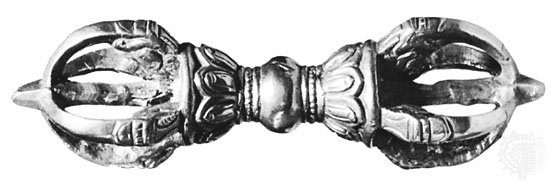
“Basically practice for me, for a Vajrayana practitioner is a 24/7 thing. Or at least it should be.”
“What is Vajrayana? In Tibetan Vajra is Dorje, which has this element of diamond indestructibility, right? So what we’re talking about in Vajrayana is the path, which is the indestructible essence, if you like, of who we really are, the ultimate nature of our mind, the ultimate nature of reality, which is indestructible/ Some great masters call it unchanging, that diamond-nature quality. What we’re trying to do in Vajrayana, is really get into contact with that indestructible essence of our mind, or nature of reality, which is the source of great bliss, Dewa Chenpo in Tibetan. So bliss is very
important in Vajrayana.”
“In the Hinayana and the Mahayana, which are the other two Buddhist vehicles, they don’t focus so much on this indestructible bliss emptiness, which is the Vajrayana which looks more at the inner channels, the yogic practices, breath and so on.”
“To go straight into Vajrayana is actually quite risky because if certain things are not in place, much as everyone wants to achieve the great bliss, it will not happen. The merit and the wisdom are essential to get a result in Vajrayana….If those are not present, then if you are trying to get results from Vajrayana practice you will have some difficulties.”
“So the road is going to enlightenment, right? To awakening. So, there’s a longer road which is much safer and you’re less likely to get lost or fall down. Vajrayana is the quick route. So, you’re taking the shortcut and with shortcuts, as we all know, they can be dangerous, you can fall down, you can slip and you can get lost. So, that’s why in Vajrayana a qualified guru is essential.” –Adele Tomlin (podcast interview quotes)
Introduction
A few weeks ago, I was invited as guest for an interview with Frenchman, Ludovic Fontaine for his Youtube channel on Meditation and Yoga called “Never Mind”, to discuss the meaning of important Buddhist concepts like awakening (l’éveil) and bliss (félicité), the importance of examining a Vajrayana guru, and my own training, background and experiences as a woman, translator and practitioner of Vajrayana.
The video is in English, with French subtitles:
00:00 Introduction to Adele Tomlin
02:07 From Law and Philosophy to Tibetan Buddhism
03:26 Meeting the 17th Karmapa and Taking Refuge
07:49 What Does Spiritual Practice Look Like in Daily Life?
10:36 What Is Vajrayāna? Bliss, Emptiness and the Nature of Mind
12:42 The Ethical Foundations of Vajrayāna
14:49 The Power and Risks of the Vajrayāna Path
21:15 Tantric Vows and the Lay Practitioner
23:38 What Is Awakening? Buddha Nature and Siddhis
28:45 Discipline and the Effort of Practice
31:05 What Does It Mean to Take Refuge?
33:50 The Role of the Guru, Devotion and Trust
40:36 Abuse of Authority and the Story of Marpa and Milarepa
46:36 What Needs to Change in Tibetan Buddhism?
50:48 Women’s Visibility and Institutional Accountability
54:03 Monasticism, Tantric Consort Practice and Consent
58:02 Subtle-Body Union, Secrecy and Speaking Out
1:01:33 Adele’s Experience of Backlash for Speaking Out
1:05:34 The Interviewer’s Buddhist Path and Work in France
1:07:10 Why Adele Founded Dakini Translations
1:08:36 Vajrayāna’s Yogic Roots and Tilopa’s Female Teacher
1:12:16 Closing Reflections on Access to Teachers
I had never met Ludovic before the interview, but he sent me some interesting topics he wanted to discuss. These topics will be of interest to Buddhist practitioners, or those interested in Vajrayana Buddhist practice and the role of women, tantra and the guru.
For example, I speak about the importance of foundations in Vajrayana:
“I try and get this across in my writing, that you can’t just go to an empowerment, a Vajrayana empowerment, and expect something to happen from this. Because actually before that, what you ideally need to have done is built up this huge foundation of ethics, merit, wisdom, and so on. So if you go into an empowerment and you think, “right, now I can practice Dorje Phagmo,Vajravarahi because I got the Vajvarahi empowerment. No you cannot.”
The discussion also includes:
• bliss-emptiness, at the heart of the Vajrayana;
• “24/7” practice—engaging with the world, not just sitting on a meditation cushion;
• awakening and *siddhis* (attainments): what does it mean to be “realized”?
• *dakinis*, the great female teachers of figures like Padmasambhava, Tilopa, and Naropa, and the ideal of equality embodied by *yab-yum*;
• the role of women today—as teachers, translators, and practitioners;
• the *guru*, the nature of devotion, and the importance of taking the time to thoroughly examine a teacher;
• issues of misconduct and abuse, the misuse of the examples of Marpa and Milarepa, and what needs to change.
Will share some short reel excerpts of the video soon!
FRENCH INTRODUCTION
Dans cet entretien en anglais, sous-titré en français, je reçois Adele Tomlin, traductrice, écrivaine et pratiquante du bouddhisme tibétain, fondatrice de Dakini Translations.
Ancienne avocate (barrister) à Londres, Adele quitte le droit pour la philosophie, part en Inde et y prend refuge, en audience privée, auprès du 17e Karmapa, Ogyen Trinley Dorje. Elle partage sa vision du Vajrayana : une voie rapide et puissante, qui travaille directement avec l’énergie et la félicité pour révéler la nature éveillée de l’esprit, à condition de reposer sur des bases solides (éthique, vœux, amour, compassion, vue de la vacuité).
• de la félicité-vacuité, au cœur du Vajrayana ;
• de la pratique « 24 heures sur 24 », dans le monde et pas seulement sur le coussin ;
• de l’éveil et des siddhis : que veut dire être réalisé ?
• des dakinis, des grandes enseignantes de Padmasambhava, Tilopa et Naropa, et de l’idéal d’égalité du yab-yum ;
• de la place des femmes aujourd’hui, comme enseignantes, traductrices et pratiquantes ;
• du guru, de la dévotion et de l’importance d’examiner longuement un maître ;
• des dérives et des abus, de l’exemple de Marpa et Milarépa invoqué à tort, et de ce qui doit changer.
🙏 Merci à Adele pour la générosité de ce partage.
🌐 POUR SUIVRE ADELE TOMLIN
Adele Tomlin est une érudite, traductrice et pratiquante bouddhiste britannique. Ancienne barrister, diplômée en philosophie et en études bouddhistes tibétaines, elle a étudié auprès de maîtres nyingma, kagyu et jonang et suit depuis 2005 le 17e Karmapa. Fondatrice de Dakini Translations, elle écrit sur le Vajrayana, les lignées féminines, l’écologie et le pèlerinage, ainsi que sur les dérives du pouvoir spirituel.
📖 LES LIVRES D’ADELE TOMLIN (en anglais)
Related