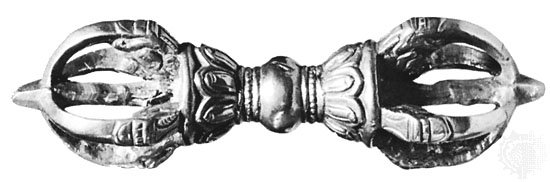

“In terms of the definitive meaning, Gyaltsab Rinpoche is an emanation of Vajrapani.”
“Stony-faced one without a fake smiling mask,
Straight-talker, not spouting phony praise,
Master of Tantric discipline, who rarely talks
Victorious Gyaltsab, I praise you!”
—excerpt from ‘Praises to 12th Gyaltsab Rinpoche’ by 17th Karmapa, Ogyen Trinley Dorje

Today, at Palchen Choling Lachi monastery in Ravangla, Sikkim, HE 12th Gyaltsab Rinpoche and special guests, commemorated the 600th Anniversary of the First Goshir Gyaltsab, Paljor Dondrub (1427-1489). Among those that gathered were Kyabje Zurmang Gharwang Rinpoche, Kyabje Bokar Rinpoche, Khen Lodoe Dhonyoe Rinpoche, various Tulkus, and members of the Sangha. Also in attendance were the CTA Sikyong Penpa Tsering, and MPs Central Tibetan Administration, as well as the parents of the Queen of Bhutan, Jetsun Pema.
The event today was broadcast line online, and included to my surprise (and delight) a video message of speech given by the 17th Gyalwang Karmapa, Ogyen Trinley Dorje (who was placed fifth in the line-up of speakers). There was no English translation of the Tibetan, so below I give a summary of it. [Since writing this article the video of the speech only has been uploaded here].
Summary of 17th Gyalwang Karmapa’s speech at the 600-year anniversary of the Goshir Gyaltsab lineage event

The 17th Karmapa first started by welcoming everyone who was attending the event. He then explained that the event, even though it was billed as a 600 year anniversary of the First Goshri Gyaltsab, it was in reality much more than that. It was about one of the most important and essential lineages that took responsibility for and preserved the entire Karma Kamtsang teachings and tradition.
The reason for that is because from the time of around the 6th Karmapa, Thongwa Donden, from one perspective, the teachings of the Karma Kagyu had degenerated. For example, some of the Drigung and Karma Kagyu centres and monasteries had been converted to other lineages and there was a custom of studying the texts of other lineages and so on. They were unable to establish and found new shedras and monasteries. At that extremely important time of the degeneration of Karma Kagyu, both 6th Karmapa, Thongwa Donden and the 1st Goshir Gyaltsab, Peljor Dondrub both upheld the Karma Kagyu teachings and lineage [1]. The 6th Karmapa led the lineage and the 1st Gyaltsab Rinpoche protected and supervised the Great Encampment (Garchen). In dependence on that, they both were able to protect and maintain the Karma Kamtsang places and institutes and also the Garchen and the unique and special practices and traditions of the Karma Kamtsang. In particular, the 6th Karmapa was able to bestow the empowerments, transmissions and instructions to the 1st Goshir Gyaltsab, Moreover, they also introduced the empowerments, transmissions, and instructions of Sarvavid, Doring, the Abhisambodhi of Vairochana, and other practices that were not previously in the lineage. These are a few of their extensive activities.So they established themselves and by preserving the Karma Kagyu institutions and teachings, were able to benefit the Dharma and teachings throughout the whole of Tibet. If we read the liberation stories of the Karma Kamtsang masters we will know this clearly.
Similarly, with the 7th Karmapa Chodrag Gyatso. In order to be able to explain the empowerments and transmissions to the reincarnation of the 6th Karmapa, Goshir Paljor Dondrup had sought out all of the dharma teachings there were in Tibet. Due to this, there was no dharma in Tibet at that time, and in particular no words of the Buddha or treatise that had been translated into Tibetan, that he had not received. He thus became a great repository of the dharma.
Until the 7th Karmapa Chodrak Gyatso reached the age of 33, he was inseparable from Goshir Paljor Dondrup, like the shadow of a body, receiving teachings from him continuously day and night. It was due to this that, as Karma Trinleypa said, there was no one in Tibet at that time or perhaps even in the world who had studied more than these two, the master and disciple.
In particular, although the 7th Karmapa, Chodrag Gyatso was ordained by Bengara Jamphel Zangpo, the main person who gave him the transmissions of Sutras and Tantras was the 1st Goshir Gyaltsab, Peljor Dondrub. This is why both of them are included in the golden garland of Karma Kagyu gurus.
Due to the influence and training of the 1st Goshir Gyaltsab, the 7th Karmapa not only became a great scholar and expert in Buddhist philosophy and Dharma, was able to give incomparable Dharma teachings, and had amazing wisdom of expertise and knowledge. He had begun giving teachings just seven days after he was born and he gave teachings without any impediment. He was also able to recite the Compendium of Validity and Dharmakīrti’s seven commentaries on it from memory. He had amazing innate intelligence, but he also had great, complete knowledge from his training, and it is clear that this is primarily due to the kindness of Goshir Paljor Dondrup.
It is because of the 7th Karmapa Chodrak Gyatso becoming an unrivaled scholar that starting from that time, there developed a tradition in the Kagyu and the Karma Kamtsang in particular of studying the Five Great Texts of the sutra tradition and so forth. Likewise, the earliest shedra in the Karma Kamtsang also most likely dates from his time. This was also the period when transmissions and editions of such texts as the Indian Texts on Mahamudra began to spread. Needless to say, the Seventh Karmapa’s ability to exert such a tremendous influence on both practice and study is closely related to Goshir Paljor Dondrup’s own bodhichitta and activity.
The 17th Karmapa went on to also describe how this crucial activity continued with the rest of the Goshir Gyaltsab lineage, from the 2nd up until the present, without any breach in samaya performing inconceivable activity that is clearly described in the histories.. In particular, during the time of the 10th Karmapa, the kindness and support of the 6th Goshir Gyaltsab Rinpoche was essential and important for the preservation of the Karma Kagyu teachings and traditions, as the Karma Kamtsang teachings were almost entirely obliterated. During this time, Gyaltsab Rinpoche sacrificed everything, even his own life and limb, and worked hard to revive and restore these teachings, thus becoming their incomparable defender. Even if this is all we consider, it is clear that there is no way we can repay his kindness.
In particular, the current 12th Goshir Gyaltsab Rinpoche, one of the heart sons of the 16th Gyalwang Karmapa, who was a buddha in human form, has been pure in keeping the three types of vows. He is free of any attachment to the eight worldly concerns, has consummate devotion for the guru, and so forth. However we look at it, in this time of the five degenerations, he is an authentic guru and spiritual friend such as is even rarer than an udumwara flower.
For that reason, the 17th Karmapa said he wanted to say [referencing the Buddha’s words in the Heart Sutra]: ‘leg-so leg-so (excellent, excellent)’ to all those participating in the event, and rejoiced at it.
The 17th Karmapa then mentioned why the Goshir Gyaltsab is considered an emanation of Vajrapani, with an account from the works of the renowned 17th century Tibetan scholar and practitioner, Karma Chagme (1613- 1678):
“In terms of the definitive meaning, it is said that the successive Gyaltsab Rinpoches have been emanations of Vajrapani, and this has often been established through both scripture and reasoning.
To give an example, in Karma Chakme’s collected works there is an account of how, when Karma Chakme was staying at Thupten Nyingje Ling, the usual custom was that when the Karmapa, Zhamar Rinpoche, and Gyaltsab Rinpoche attended a puja, they would walk down the centre aisle. One day, Karma Chakme thought, “They say that Gyaltsab Rinpoche is an emanation of Vajrapani. I wonder if that is true?” The reason he doubted it was that the Karmapa and Shamarpa were very clearly prophesied by Padmasambhava (Ogyenpa) but he had never seen a clear prophecy by Padmasambhava of Gyaltsab Rinpoche.
So Karma Chakme thought, “If he really is Vajrapani, I have recited the Vajrapani mantra many times and still consider Vajrapani my yidam. It is quite possible that Gyaltsab Rinpoche knows this.” What he did next was to visualize Vajrapani and recite a couple hundred of his mantras. He then joined his palms beneath his robes so that no one else could see, and said, “If you really are Vairochana, please look at me when you come down the centre aisle.” He did this secretly so no one else would know.
Normally when the Karmapa and his heart sons walked down the centre aisle, the Karmapa and Shamar Rinpoche would be in front and Gyaltsab Rinpoche walked behind them. Usually the custom was that they did not look to either side as they entered. But on that day, when they got to the midpoint of the aisle, Gyaltsab Rinpoche cocked his head slightly and looked directly at Karma Chakme, who was in the row to the left. Not only did he look, he also smiled. When he smiled, Karma Chakme thought, “There is no doubt at all that he is an emanation of Vajrapani,” and he was free of any stain of thought.
At that time, he thought he should request a teaching on Vajrapani, but he had nothing to offer in support of his request, so he did not. But in his own mind, whenever he practiced guru yoga, when he took the four samadhi empowerments, he would visualize Gyaltsab Rinpoche as Vajrapani and take the empowerments, he wrote.
For this reason, in terms of the definitive meaning, Gyaltsab Rinpoche is an emanation of Vajrapani.”
So, from the First Goshir Gyaltsab up to the current, 12th incarnation, they have maintained, supported and preserved both the Dharma and worldly affairs of the Karma Kamtsang and for that kindness alone, the 17th Karmapa re-iterated they are a very important Lineage worthy of commemoration and thanks.
The 17th Karmapa ended by thanking all those scholars and practitioners whose activities preserved and maintained the teachings of the Karma Kagyu, as well the main incarnate heart-sibling teachers of the Karma Kagyu lineage.
An English translation of 12th Gyaltsab Rinpoche’s speech at the event can be read here.
The Goshri Gyaltsab lineage: a lineage of integrity, courage and diplomacy

As for my own connection to 12th Goshir Gyaltsab Rinpoche, I have visited Rinpoche’s monastery at Ravangla a couple of times before, in particular for the empowerment Rinpoche gave there in 2019 on the Knowing One Liberates All Cycle from a 9th Karmapa text. Recently, this year, I attended his teachings and empowerments in Indonesia on Batam Island and Borobudur, see here.
I also authored the Treasury of Lives biography of the liberation-story of the 2nd Goshir Gyaltsab, Tashi Namgyel (1419-1518), whose diplomatic presence (yet unwavering faith and commitment to truth and justice) led to a dispute regarding a false 8th Karmapa claimant put forward for worldly political reasons (not that dissimilar to the one today with the 17th Karmapa) being resolved and the genuine and worthy candidate being enthroned.

The 6th Goshir Gyaltsab Rinpoche, Norbu Zangpo, whom I recently wrote about during my pilgrim travels to Lijiang, Yunnan was very close to the 10th Karmapa, Choying Dorje who had been forced to flee Tsurphu Monastery and Tibet due to the Mongolian invasion led and supported by Gelugpas, and attempted assassination attempts on his life and other Karma Kagyu sangha. The 10th Karmapa had to spend many years in Lijiang and during that time recognised the 6th Gyaltsab incarnation, said to have been his son with a local Naxi woman consort. During that time, the 6th Gyaltsab and the 10th Karmapa’s attendant, Kuntu Zangpo never left his side or abandoned supporting him. Neither did the Tai Situpa lineage either.
Karmically, the current 12th Gyaltsab Rinpoche is also well-positioned to help ensure the official 17th Karmapa finally gets to return to Sikkim (after two decades since his escape into India) and teach and stay at Rumtek Monastery, the seat of the Karmapas in India.
The Bhutanese royal guest and connection


It was interesting to note in the list of invited guests, which also included various Karma Kagyu Rinpoches and Khenpos, the parents of Jetsun Pema, the Queen of Bhutan, also attended the event. Sadly, for women at least, she is one of the very few token females at the event (there is only one in the CTA six person delegation as well).
As I wrote in previous articles, and in one of my recent updates to the 17th Karmapa Return to Sikkim petition suggesting that petitioners email the Royal Family of Bhutan, due their previously having actively supported Thaye Dorje (due to wedding ties with the secretary of the 14th Zhamarpa) and undermined the 17th Karmapa in the process of doing so. Let us hope that this Bhutanese Queen’s presence will ensure that wrongs are righted on that. For more on the Bhutanese influence in the 17th Karmapa’s situation see the recent podcast interview I did with Mick Brown, British journalist and author of Dance of 17 Lives and how armed Indian soldiers were used (on request by the Bhutanese royals) to allow 14th Zhamarpa to enter Rumtek Monastery by force, after being evicted from his self-imposed complete power there by the three main heart sons, Tai Situpa, Gyaltsab and Jamgon Kongtrul 3rd.
In addition, the 17th Karmapa, Ogyen Trinley Dorje has yet to be (publicly at least) invited to visit Bhutan, despite the strong connection and relationship of the 16th Karmapa, Rigpe Dorje with the Bhutanese Royal Family and people. The Bhutanese royals previously gifted the 16th Karmapa a huge amount of Bhutanese land and also a Bhutanese passport. Although the 12th Tai Situpa (who was personally given the handwritten letter of the 16th Karmapa that led to the discovery of the current 17th Karmapa, then a nomad’s family boy), recently visited Bhutan, which was also a first in his lifetime.
Award of ‘Lifetime Service’ to Karmapa’s General Secretary

Finally, an award was given by the 12th Gyaltsab Rinpoche for a ‘lifetime service’ award to the late General Secretary, Je Khedrub. His niece came to pick up the award.
Rumtek Monastery, Sikkim

The seat of the 17th Karmapa, Rumtek monastery was originally founded by the 9th Karmapa. It is the largest monastery in Sikkim and the seat of the Kagyu tradition in Sikkim. It was significantly rebuilt with patronage of the Sikkimese royal family by the Sixteenth Karmapa, Rangjung Rigpe Dorje, who in 1959 left Tsurpu in central Tibet and went to Sikkim with his brother, the Sixth Dzogchen Ponlob, Jikdrel Tsewang Dorje and other followers. The 16th Karmapa formed a legal trust, named “Karmapa Charitable Trust”, in August 1961 and registered it with the Indian Government through the Political Office of India in Sikkim.
His entire property, including Rumtek Monastery, was secured under the trust to continue in perpetuity for his subsequent reincarnations. Original administration of the Trust included seven trustees, including Karmapa’s Senior and Junior General Secretaries, Thamcho Yongdu and Jewon Drakpa Yongdu respectively. The Trust Deed specified that while Sixteenth Karmapa was alive, fourteen administrative members, including the Sixteenth Karmapa himself would govern the trust. Most of the administrative members were senior monks from Tsurphu Monastery, but the majority of executive members were lay elites devotees of the Sixteenth Karmapa from Nepal, Sikkim, and India. Therefore, Karmapa established his institution at Rumtek Monastery was constructed upon a strong legal foundation in India.
Tragically, and unreasonably, the 17th Karmapa, Ogyen Trinley Dorje has yet to visit or even stay at Rumtek Monastery for the past two decades. The cited reason by Indian government source is due to the pending court cases launched by the unofficial claimant to the Karmapa title, Thaye Dorje and his predominantly European followers. Please sign, share and support the petition for the return of the 17th Karmapa to Sikkim here.
For more original research, translations and articles about the Goshri Gyaltsab lineage, see here.
Dedicated to the long-life and good health of both the 17th Gyalwang Karmapa and the 12th Goshir Gyaltsab Rinpoche. To the flourishing of the Karma Kagyu lineage and traditions and the Buddha Dharma teachings and all beings!
Music? Bhutanese Song Long Life Prayer for Tsurphu Goshir Gyaltsab Rinpoche by Sangay Wangzom/Sangay Palmo.
Endnotes
[1] “Peljor Dondrub had been a student of the Sixth Karmapa, Tongwa Donden (karma pa 06 mthong ba don ldan, 1416–1453), who had given him the title Gyeltsab (rgyal tshab), meaning “regent.” The Ming Zhengtong Emperor (正統, r. 1435–1449 and 1457–1464), is said to have given Peljor Dondrub a golden seal with the title of National Preceptor (guoshi國師), which is written “goshri” in Tibetan. The lineage is thus commonly known as the Goshri Gyeltsab (go shri rgyal tshab).” Treasury of Lives biography.