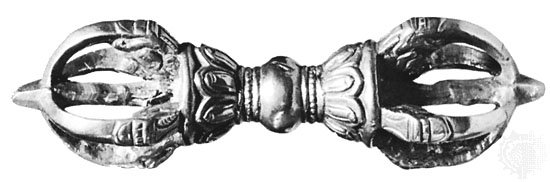

“Leaving nothing behind but a name” མིང་གི་ལྷག་མ་ཙམ་དུ་གྱུར་ –-Tibetan idiom used to describe success at totally destroying so-called “enemies”
As I wrote about in A TIBETAN TRAVESTY: DESTRUCTION AND APPROPRIATION OF KARMA KAGYU/8TH KARMAPA’S MANY MONASTERIES, the 17th Gyalwang Karmapa, Ogyen Trinley Dorje recently taught about the reasons why 8th Karmapa, Mikyo Dorje newly established many colleges and retreat centres, and the case study of the Karma Kagyu Gatsel Karma Zhunglug Ling college and its stolen/forced conversion into Ganden Thosam Dargye Ling monastery by the 5th Dalai Lama/Gelugpa sectarians.
The 17th Gyalwang Karmapa has also taught (January 2024) about the importance of restoring Karma Kagyu studies and legacy after the massive destruction of Karma Kagyu monasteries and shedras in central Tibet during what he terms the “Mongolian invasion”that led to centuries of neglect. Interestingly, as I mentioned here in my recent article about the 5th Dalai Lama’s fascination with studying and practising violent tantric rituals to “kill and destroy” so-called enemies, the 17th Karmapa and others within Tibetan Buddhist community seem to be “naming” that period as an act of Mongolian aggression only. Yet, the Tibetan language accounts of that time period, including that of the 5th Dalai Lama’s autobiography itself, clearly show that the Tibetan Gelugpa sectarians not encouraged and supported the Mongolian violence and persecution but also actively participated in the murder, violence and theft. The Gelugpa sectarians were then given spiritual and political power by the self-declared new King of Tibet, Gushri Khan, in the form of a new politically created tulku lineage, the 5th Dalai Lama (a Mongolian name), which was then backdated to include other people [1].
Layjang, the official Tibetan language bulletin of the Karmapa’s office, recently published in Tibetan some photos taken in Tibetan areas, of ruins said to be former Karma Kagyu monasteries. I have translated them here for readers. These are just the “tip of the iceberg” when it comes to documenting the ruin and theft of Karma Kagyu property and objects (and that of other lineages) from the 17th Century onwards by the Mongolians and Gelugpa sectarian “demonic” forces.
The questions that begs to be answered is when will the Gelugpa sectarian forces, who still remain dominant in Tibetan communities in exile, atone and seek to repair what they did to the other lineages, in alliance with the Mongolians and then the Chinese Qing dynasty, to maintain their political and spiritual rule over Tibet? Can there really be any hope of movement for Tibetans in Tibet until and unless they start to let go of their shadowy “unseen beings” hold over Tibet and Tibetans, in the form of the Dalai Lama/Mongolian created institution and their ongoing and excessive use of long-life and violent tantric rituals to maintain that karmically harmful “hold”? As I wrote about in the Mongolian-Gelug shadow over Tibet (2024), the main “geo-political” forces that are gaining from that status quo/stalemate are not the Tibetans in Tibet or exile, but the US and European governments keen to use the Tibet issue as leverage and division with China (who have zero interest or knowledge in the complexities of Tibetan history or culture and the violent, sexually abusive realities of Gelugpa/Dob Dob culture).
1) The Ruins of Drongbu Old Monastery founded by Gyapa Gangpa, student of 1st Karmapa, Dusum Khyenpa (published by Layjang on 4th October 2025)


Drongbu Monastery was founded by Gyapa Gangpa Rinchen Ozer (b.1175/1165 – d.1249), a student of Palden Dusum Khyenpa [1st Karmapa] and the fourth throne holder of Tsurphu, around the beginning of the 13th century. It is located in Markyang Township, Nyemo County.
This is from the biography of 2nd Karmapa, Karma Pakshi:
‘’In Drongbu, a red ray of light in the shape of a crescent moon emanated from the body of Khandro Sangwa Yeshe, filling all of Tsang and U, indicating that all of U-Tsang would be under his control. In Drongbu, during the consecration, he dreamed of Vajra Tummo holding a victory banner, blazing with five-colored rays of light in all directions.’’
In the biography of [3rd Karmapa] Rangjung Dorje:
‘’In the temple of Drongbu, in a pure vision, I offered prayers to Manjushri, and Chenrezig.’’
In the biography of Je Chodrak Gyatso [7th Karmapa]:
“In Drongbu Old Monastery, when a hand was placed on the Thangka of a Ngakpa, many relics appeared on the hand.”
There are many such important monastic seats mentioned in the biographies of successive lamas.
From the lineage of Gyapa Gangpa, there emerged a title holder of Gosri known as Drongbu Goshri. Je Tsongkhapa Ratnabhadra or Kashi Rinchen Zangpo, who resided within the lineage of Zungjug, Dronbu Gosri, one of the three masters of Dharma Lord Dewachen, and Dronbu Gosri, who served as the Gungpa within the Garchen during the time of Je Choekyi Gyalpo, were among the many renowned figures. According to the Golden Garland, their lineage continued until later times:
“Later, among the descendants of Gya Gangkye, there was also one called Drongbu Goshi. From then on, they gradually took ownership of the Sogtsanden Monastery, including the bridge, and their activities became great. Even now, it seems that there are still some unbroken lines of descendants in Tibet and Mongolia.”
In the history of the Kamtsang, there are many accounts of Drongbu Monastery and Drongbu Goshri, so it seems necessary to investigate this matter in detail. Written by Khamse.
From Rabjam Norbu Dawa Shel in his biography:
“Chöje Gyawa Gangpa, also known as, was born in the village of Shang (in Tsang), into the Khyunpo clan, as the son of a Nyingma tantric practitioner, in the year of the Wood Female Sheep (1175). He was the sixty-sixth holder of the Karmapa lineage from Düsum Khyenpa. His ordained name was Rinchen Özer. It is said that his ancestor, Senge Gyaltsen, received teachings from the Indian Pandit Phrala Ringmo. Although his family line had produced accomplished practitioners of the Phurba Lhanak tradition for generations, he was not entirely satisfied with the Dharma.
He met Jé Düsum Khyenpa while he was residing at Jomo Gang. After receiving Dharma teachings from him, he gained great certainty. He practiced there and became known as Gangkarwa. He received the cycle of peaceful and wrathful manifestations of Mahamaya from Soyé Yeshe Wangchuk. He also relied on many other lamas, such as Drikung Chöje, Taklung Thangpa, Möchokpa, Layakpa, Dakpo Dulzin, Nyené Saljang, and Khaché Panchen.
His main teacher was Dowo Repa, from whom he attained realization of Mahamudra. He founded the old Drongbu Monastery in Gyawa. Later, his descendants maintained and expanded both the old and new monasteries, which flourished greatly. They were known for their great service to the Karma Kamtsang. At the end of his life, Mongol troops arrived in Tibet. He passed away at Tsurphu in the Earth Female Bird year (1249) at the age of seventy-five,” it is said.”
Extracted from Khamsar Web.
2) The Ruins of Karma Kagyu Ganden Mamo Monastery, founded by Second Zhamarpa in 1386 (published by Layjang on 4th October 2025)


The next ruins is a monastery founded by the 2nd Zhamarpa, Kacho Wangpo who was a student of the 4th Karmapa, which judging by its current name “Ganden Mamo” seems to have been later forcibly converted by the Gelugpa sectarians during their sectarian persecution against the other lineages. The information states that there were regular annual retreats there which produced great yogi practitioners.
“Founder: Gyalwa Gargyi Wangchuk, the Second Zhamar Tulku, Khacho Wangpo.
Year of Establishment: Fire-Tiger year of the sixth Rabjung, 1386 AD.
Religion: Karma Kagyu.
Size and Structure: Assembly hall with sixteen main pillars and ninety-nine short pillars, four stories with a wide roof. Nearby are monks’ quarters, kitchens, study rooms, and retreat rooms. Inside the lower assembly hall were Shakyamuni Buddha with his three attendants and the Eight Close Sons, with the Buddha statue being three stories high. On the second floor were the Sixteen Arhats, and on the third floor, the protector’s shrine of the farmer couple and the local deity, the Yaksha Norbu Dzimpa. The fourth floor is the Shelrey Lhakhang.
Location: West side of Changra Village, Rabten Township, Mainling County, Nyingchi City, Tibet.
Scale: From Feast for Scholars (Mkhas pa’i dga’ ston): “In general, no fewer than three hundred pure meditators ( sgom chen pas) would spend three months each in summer and winter in retreat, the activities of instructional teachings would greatly increase, and countless realized yogic masters would appear.”
A tourist, Khamre, took a photo.
Endnotes
[1] More and more research is coming out on this horrific period of Tibetan history, such as this excellent research paper by scholar Dr. Cecile Ducher, in Goldmine of Knowledge: The Collections of the Nechu Lhakhang in Drepung Monastery describing the enormous amount of Kagyu (and other lineage) texts only recently discovered in the big Gelug monastery of Drepung in Lhasa, which also housed hundreds of stolen sacred objects too. Also, as I wrote about before here, also regarding the Gelug/Mongol invasion of other places, such as Ladakh and how that led to the banning of the Dalai Lamas/Gelug in Bhutan.
Sources
The Mongolian-Gelug shadow over Tibet: Six decades of failed US-Gelug policy (Adele Tomlin, Buddhist Door Global, August 2024)
Tibet’s history is littered with a lot of abuse of power at every level in every generation, including the present generation. This is why it is so important to find and authentic, realized teacher and to do the due diligence before diving onto the Vajrayana path. HH Dudjom Jigdral Yeshe Dorje warned us about this and let us know how dangerous the path could be. He even told us not to get on this path without a qualified teacher to guide us. So many people dive right in even trying to copy the names, dress, and mannerisms of the Tibetan people without doing any due diligence. When things like this are exposed and all of the other dirty laundry of high lamas sexually abusing students, rape in the monasteries, theft of funds, etc. etc. those who bought the story lock, stock, and barrel end up losing faith in the Buddha’s Dharma instead of doubling down on searching for the Truth of our ignorance and applying the antidote for this kind of misery and damaging samaya. Guru Rinpoche told us about this dark time. It is disheartening so see the hypocrisy exposed but it is very important not to view things with rose colored glasses on.
Indeed. We should not allow it to make us lose faith in the perfect Buddha and Dharma and Arya sangha. Why do you think I write about the things I do and continue to remain devoted to Buddha Dharma? To show people we do not have to give up. We can still practice and focus on what’s worth focusing on and not throw the baby out with the bath water. Just throw out the dirty bathwater instead!
That said students who are not qualified are being led the wrong way by unqualified teachers. So it is important to have studied Dharma and to know what is correct or not and to know what makes a Vajrayana guru qualified or not. There are teachings out there on how to examine a guru for the required qualities. They also have to examine us.
Exactly! One must never concede one’s continual efforts upon hearing and witnessing malpractice, corruption, hypocrisy, and incorrect applications on the path.
In this sense the dark is also the servant of light.
The stairway to the glory of heaven is always narrow, difficult, arduous, and sometimes brutal and cruel. An enlightened mind realizes that it can never be shared, bought or sold.
A man whom steals my wallet steals trash. A man whom steals my good reputation takes away everything.🤔
Thank you so much for posting this article, Adele.
Much love.❤️❤️❤️
just what kind of karma was on the Kagyu side? too much gold? wine and women crazy yogi style, jealousy and greed on both sides and not at all Buddhist style… hahahaha; start again
Peace love and compassion. They are not barred from having even photos of their linesge head and teachers in Tibet now are they?