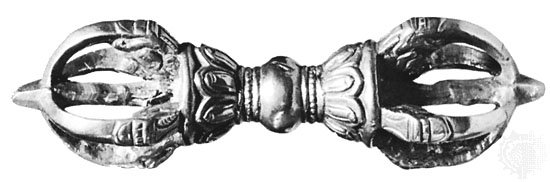

“Similarly, when you think about rigpa mantras, protection mantras, and true words, all of these are considered to be among the three secrets of body, speech and mind, they are considered to be secrets of speech. When talking about the secret of speech, we can say the secret of speech means like the hidden capacities of our speech. We ordinary people are not able to know it, but there is this hidden power or capacity of speech.” –17th Karmapa (Day 5, 2024 teaching)
Introduction
Here is a brief summary/outline of Day 5 of the 17th Karmapa’s teachings on the Origins of Secret Mantra. The teaching continued demonstrating the presence of ‘mantra’ seeds/origin in Early Buddhist texts.
Following on from Day 4, in which the 17th Karmapa explained the forbidden ‘rigpa’ mantras cited in early Buddhist texts, and the continuum/thread and seeds of Secret Mantra teachings in Early Buddhism, via the concept of ‘awareness’ (yeshe) of Buddha Nature, the main points of Day 5 teaching were:
- Permissible ‘rigpa’ mantras (paritas) related to certain types of protection the body, from snake poison, and sangha community. For example in both Hinayana and Mahayana Sutras tetxs, such as the Mahayamuri Sutra (Great Peacock King Sutra), the use of mantras for bodily protection from snake poison was taught and permitted.
- The reason for the development and more ‘relaxed’ attitude to mantras in Buddhist communities
- The ‘secret’ power of ‘true words/speech’ and the ‘hidden qualities’ body, speech and mind,
- The ‘seed’ presence of secret mantras within Early Buddhist and Mahayana textual sources and practice.
The teaching ended with a fascinating discussion of the power of ‘true words’ and ‘speech’ in Early Buddhist and Mahayana texts, and how they seem to be more powerful in terms of their effect on others, than that of protection or rigpa mantras.
In summary, the 17th Karmapa explained how the secret power of speech, mantras and true words, was accepted in the other Buddhist traditions and moreover, that there are many qualities of body, speech and mind that simply cannot be fathomed by ordinary beings, speech being one of them. So even though in ancient times, most people could not have fathomed the material development and types of technology we use today, they nonetheless had unfathomable ways of thinking about mind, which contemporary people cannot understand or use.
Unfortunately, I do not have time to do full transcripts for these teachings, but summarise and outline the main points. As no slides were presented by the Karmapa in Day 5, I am using images I have downloaded for visual references, connected to the topics. I created a video clip from this teaching on the secret power of speech (Tibetan and English subtitles), here.
On a personal note, it was interesting to hear the 17th Karmapa speak about how true words are more powerful than these mantras, as this is something that feels energetically correct. There is nothing more powerful to have ‘on one’s side’, so to speak, than the truth, and nothing but the truth. This is something those who are grossly dishonest and hypocritical intuitively understand too, which is why they are often so afraid and concerned about the truth coming out. As is often quoted, “the only people mad at you for speaking the truth, are those living a lie!” May it be of benefit!
Music? Mahamayuri mantra, and Gimme Some Truth by John Lennon.
Written and compiled by Adele Tomlin, 9th August 2024.
DAY FIVE SUMMARY
The permissible ‘rigpa’ mantras in Early Buddhist texts

The 17th Karmapa gave an extensive teaching on the original source texts from the Vinaya and Pali Canon of the Theravada/Hinayana tradition for the use of permitted mantras for learning writing/letters, for protection and healing mantras within Early Buddhism and the Mahayana, such as texts about the Method of the Forty-Two Letters (a text about studying writing in Sanskrit). Also, in various Vinaya texts it states that mantras to cure stomach sickness and to convert worldly non-Buddhists, and to neutralise poison are permitted.
The protective mantras in the Pali tradition are also considered very important. As an example, the 17th Karmapa spoke about the Sutra called The Questions of King Milinda (Milindapañha), which purports to record a dialogue between the Indian Buddhist sage Nāgasena, and the 2nd century BC Indo-Greek king Milinda/Menander [1]. Various protection mantras are cited during their dialogue, such as those to protect the aggregates and the body, and those used to protect from poison and snakes, the banner mantra and more.
In particular, the Karmapa mentions how in one early Buddhist text, the words ‘secret mantra’ were used to describe a mantra that Buddha used to neutralise poison after a monk was bitten by a venomous snake. The Karmapa explained that such texts demonstrate the use of such mantras during that early time period:
“So, even during the time of the second and third Century before the Common Era, there were many different protective mantras that were used. What we can understand from this likewise the modern Sri Lankan Theravada school as well as those from Burma and Thailand also have many more protective mantras than that. These protective mantras are regularly recited to remove obstacles. Or like we have in our Tibetan tradition to gather wealth and auspiciousness and goodness. Also, if we think about it according to the explanations of some Japanese scholars, within the southern Buddhist tradition say there are twenty-nine different sutras that teach these protective mantras. So, all of these protective mantras that were recited regularly in the 2 or 3rd Century BC. “
1. Mantras for protecting the body and from poisonous snakes

The 17th Karmapa then spoke about the meaning, contents and early Buddhist/Hinayana textual sources on some of these permitted mantras. Among the texts he cited are those which teach mantras for protecting the body/aggregates and also those related to protection from snake bite poison mantra/dharani recitation.
The 17th Karmapa explained how some of the passages in Early Buddhist texts on the finer points of discipline for monastics about neutralising poison of snakes, are also recited during the name-card ritual for the deceased in the Tibetan Buddhist tradition, which actually uses the words ‘secret mantra.’
2. The Great Peacock King Rigpa/Vidya (Mahāmāyūrī) Mahayana texts on permissible mantras

In terms of the texts related to mantras in Mahayana and Tantras, the 17th Karmapa first cited the Mahayana Sutra of the Great Peacock King (Mahamayuri Vidyarajni Sutra)which has six different translations in Chinese and that also refers to the use of the ‘Great Peacock’ protection mantra/recitation (the Mahamayuri mantra) from poisonous snakes.
In this Sutra, the Karmapa explained that even though the Dharani mantra has the name Great Peacock, one actually recites the names of the eight Naga kings with loving kindness to get protection from snakes[1].
The reason the peacock is referred to in relation to protection from poison,the 17th Karmapa explained is because many people believed that peacocks ate snakes, or had special power to overcome snake poison. Whether they could completely survive a large amount of poisonous venom is not clear, but Tibetans for example, believed that they could eat a little poison and not be affected by it. In any case, the 17th Karmapa continued, the mantra was considered very important in the Chinese tradition, because there were many Chinese translations of it. The story in this Mahayana text is debated by various scholars as to whether it originated in early Pāli and Vinaya texts. Nonetheless, it is a clear example of how the Buddha taught the use of recitation of mantra to neutralise and recover from snake poison.
3. The Banner/Flag Mantra: protection from fear

A third kind of mantra the 17th Karmapa explained that can be used and is referred to is found in the Vinaya and Pali canon texts called the Indra’s Banner (Indradhvaja) mantra. This relates to a time when the gods and demigods were in battle and the gods felt like they were losing, so they would see Indra’s banner and then be inspired and freed from fear.
4. Āṭānāṭiya mantra: protection of Buddhist community from harm of malevolent spirits

The fourth kind of mantra is the Āṭānāṭiya mantra, which was taught by one of the Four Heavenly Kings to protect the four-fold community of monks and nuns as well as lay men and lay women from harm from evil spirits. This Mantra appears in the Pali canon and is called the Āṭānāṭiya Sutra [3].
The 17th Karmapa then gave an extensive explanation of the different Hinayana and Mahayana texts the mantra appears in. So the mantra was preserved in the Mahayana too.
In summary, the 17th Karmapa concludes by saying:
“In the Theravada/Hinayana tradition there are many parita, or mantras that give physical protection. It is clear they called that in the Theravada tradition. In the other schools, it’s not so clear that these protective mantras are called paritas. In the other schools, the term is not used much in the secret mantra. So, perhaps the term parita was not preserved up through the time of the Secret Mantra. In any case, mantras for physical protection were said to be allowed to be recited in early Buddhism.”
Reasons for the change/development of mantras in Early Buddhism

In the second half of the teaching, the 17th Karmapa then explained the four main reasons given by a Japanese scholar, Yukei Matsunaga as to why there were changes in attitude and development of the use of mantras in Early Buddhism related to the difference between urban and city areas, and in urban areas that had more tribal customs such uses of mantras were already present or people were already more accepting of them.
Also the differing attitudes of people in those areas. Such that as Buddhist teaching spread from the monastic communities to urban villages, people were more relaxed about using mantras there. Also, their presence in the Pali Canon in Early Buddhism, shows that people had a changed attitude about using protective mantras for the body:
“We see that within all these different changes the Buddhist religion actually was able to maintain the essence of the Dharma whatever that is, at the same time as being able to take a form that was appropriate to the needs of the different social environments it was in. So, Buddhism was able to preserve the essence of its teachings/Dharma, but also able to adapt to the cultures and the environments. This is a particular capacity or ability of the Buddha Dharma and the teachers.”
The Power of True Words: Satya

In the final part of the Day 5 teaching, the 17th Karmapa considered the idea and practice of the power of true words and how this is not only found in the Buddhist canon, but in the Hindu Brahmanical canon too.
The 17th Karmapa first cites the Pāli canon Jātaka Tales that contains a story about a child bitten by a snake and the parents sought help from an ascetic, and explained some true words about his previous lives, and said “by this truth, may this child be healthy.” This is the 444th among the 500 Jataka Tales and there are many others in the Jataka Tales about the power of true speech.
The Aṅgulimāla Sutra and Buddha’s teaching to him on the power of ‘true speech’

Then, the 17th Karmapa mentions the Aṅgulimāla Sutra and it talks about the extremist Aṅgulimāla (lit. finger necklace) who had killed many people and wore the fingers of the people he had killed around his neck and was almost demonic. But he repented and went to see the Buddha and attained Arhatship. Then after that he went to a very important city in central India called Shravasti to beg for alms. He saw a woman who was in labour but was unable to give birth and he felt great compassion for her. So he went to see the Buddha and explained what he had seen, and the Buddha told him to go back to the woman and say:
“Since I have been born in the noble family of Arhats, I have never knowingly taken any sentient being’s life. If this is true, then by this truth may you be healthy.”
After he said this, the woman who was in labour, immediately gave birth to the child.
The 17th Karmapa went onto explain that the Aṅgulimāla Sutra does not actually us the term ‘true words’. However, in the Questions of King Milinda it does give a list of many different types of protective mantras that Buddha recited and among them there is one called the Aṅgulimāla Mantra that can probably be identified .
Scholars now hypothesize that it is from the 86th Sutra of the middle length discourses on the Aṅgulimāla Sutra. But that the words used are basically the same as those used in the story in the Jataka Tales. The 17th Karmapa then cites various other Hinayana scriptural sources that speak about the story, even if they do not use the term ‘true words’ they all accept the power of speaking what is true.
The blessing of ‘true words’ in the Prajñāpāramitā Sutras

The 17th Karmapa then discusses how this idea of the power of ‘true words’ was used and spread to the Mahāyāna Buddhist tradition. In particular, in the Prajñāpāramitā Sutra in Eight Thousand Lines there is a story about a man offering his own body parts to a Bodhisattva, who then by the power of true words was healed.
The word ‘blessings’ of true words, which the Karmapa explains is a very important word in the Secret Mantra, also appears in various translations of the Eight Thousand Lines Prajñāpāramitā Sutra and in other Prajñāpāramitā Sutras, which the Karmapa also cites. In terms of Secret Mantra it is not so clear in the texts, however:
“Within the Mahāyāna, there are protection mantras. There are the rigpa/vidyā mantras that are able to affect other beings, to exert some power on other sentient beings. They are both recognized for this power. However, compared to the protective mantras and rigpa mantras, it seems that ‘true words’ were able to exert an even stronger and more immediate power than those.”
Summary: contemporary vs ancient ideas and the secret powers of speech and true words

The 17th Karmapa then concluded Day 5 by summarising the teaching and speaking about the ‘secret’ power of speech:
“So when speaking about the origins of Secret Mantra in Early Buddhism, as I said before, in terms of elements of early Buddhism that are related to the secret Mantra, the Vidya/rigpa mantras were not 100% or completely forbidden. There were a few that were allowed. Not every single mantra was prohibited. There are some that were accepted and people were allowed to practice them. In particular, the protective mantras for one’s own body, speech and mind.
Also, the power of true words, whether in the Hinayana or the Mahayana, was accepted or allowed, this is very clear. When thinking about the word Vidya/rigpa and Buddha’s clear realization and clear wisdom, there’s a connection between these two, as I discussed the other day.
Similarly,when you think about rigpa mantras, protection mantras, and true words, all of these are considered to be among the three secrets of body, speech and mind, they are considered to be secrets of speech. As for the secret of speech, we can say the secret of speech means like the hidden capacities of our speech. We ordinary people are not able to know it, but there is this hidden power, or capacity of speech.
In the four Āgamas, not only are there these secrets of speech among the three secrets, but even though there are many other hidden philosophies and views we did not encounter them.
If we think about the lifestyles of ancient and modern people they are very different from each other. For example, in our contemporary lifestyle, we have phones and internet and TV screens. we have all these different things that people of ancient times could hardly even imagine. Similarly, when thinking about the telephone or internet, it is something that people of ancient times could not conceive at all. Likewise, in ancient times, people also would not have been able to consider all this development of material and technology that happened. External objects have progressed greatly. Compared to previously, they are better and have improved. However, the opposite way of looking at that, is that even though ancient people didn’t have such material development, one could say that in terms of the internal mind, many ancient people spoke about the inner, hidden workings of the mind.
People from a few thousand years ago, even at the time we were younger, the way these people thought about things there was no internet, particularly in the place where I was, there was no internet, or not even any modern development, but the level of people’s thinking or the way that they thought or felt about the hidden world, would other people be able to live like and think like that? It would be difficult for them. So, ancient people had a secret or hidden world that modern people would not be able to understand or imagine at all. For example, during the time of early Buddhism, people were able to have conversations with the worldly gods.”
The 17th Karmapa then cited a Sutra in which the Bodhisattva Vajarapani, who is also said to have been the secret compiler of Secret Mantra, and was also said to be like the ‘Buddha’s bodyguard’, got frustrated with a Brahmin boy who would not answer the Buddha’s question asked three times and threatened to smash his head with an iron ore if he did not, which made the boy quickly answer the questions. Interesting example!

Endnotes
[1] In the Milindanpanha, Menander is introduced as the “king of the city of Sāgala in India, Milinda by name, learned, eloquent, wise, and able”. Buddhist tradition relates that, following his discussions with Nāgasena, Menander adopted the Buddhist faith “as long as life shall last”: and then handed over his kingdom to his son to retire from the world. It is described that he attained enlightenment afterwards.
[2] According to the Mahamayuri sutra of Pancaraksha, there was a bhiksu called venerable Svati. He was newly ordained in the Buddhist community of monks. He was unfortunately bitten by a poisonous snake and fainted. On seeing his condition venerable Ananda reported this incident to Buddha Shakyamuni. Lord Buddha, out of compassion for the newly ordained monk and the future ones, disclosed a dharani which was capable of eliminating poisonous harm and malignant diseases. This was the dharani of Arya Mahamayuri.
The Buddha proceeded to impart the Mahamayuri Vidyarajni mantra to Ananda, who hastened back to Sāḍdhi and employed the mantra for healing. Through the power of the mantra, the poison was eradicated, and Sāḍdhi regained consciousness, fully restored to health. Expressing the significance of the mantra, the Buddha instructed Ananda to propagate it among all sentient beings, offering protection from harm and the opportunity to attain happiness.
The Buddha imparted the Mahamayuri Vidyarajni Sutra with the specific intention of addressing the manifold challenges faced by sentient beings. According to the sutra, both the text and the mantra possess the extraordinary power to alleviate diseases, afflictions, and fears while serving as a protective shield for all living beings. Instructing Ananda to disseminate this sutra and mantra widely, the Buddha aimed to liberate sentient beings from suffering and guide them towards the attainment of happiness.
Delving into the origin of the Buddha’s emphasis on this mantra, the sutra recounts a past life where the Buddha existed as a golden peacock king residing on the southern slope of Mount Meru. Engaging in the daily recitation of the mantra, the king experienced perpetual peace in mind and body. However, a lapse occurred when, driven by desire, he neglected the mantra to frolic with his peacock consorts in the forest. Succumbing to intoxication and a loss of mindfulness, he inadvertently fell into a hunter’s trap. Bound and facing peril, he remembered the mantra, reciting it and miraculously securing his release, with his consorts emerging unscathed.
Recognizing the formidable efficacy of this mantra, the Buddha discerned its capacity to mitigate grave transgressions, eradicate minor wrongdoings, and dispel all forms of suffering. Out of compassion, the Buddha shared this transformative mantra with all sentient beings, envisioning that its constant recitation would empower individuals to transcend fear, surmount suffering, perpetually attract good fortune, evade danger, and live long and contented lives.
[3] The Āṭānāṭiya Sutta is the 32nd Sutta in the Dīgha Nikāya (“Long Discourses of Buddha”) of Pāli Canon. It is a poem of spiritual protection against evil spirits and it was presented to the Buddha by one of the “Four Great Heavenly Kings”, King Vessavana (Pali; Sanskrit: Vaisravana)